The alcoves either side of your chimney breast are not the same width.
They never are. That is the whole reason this work exists.
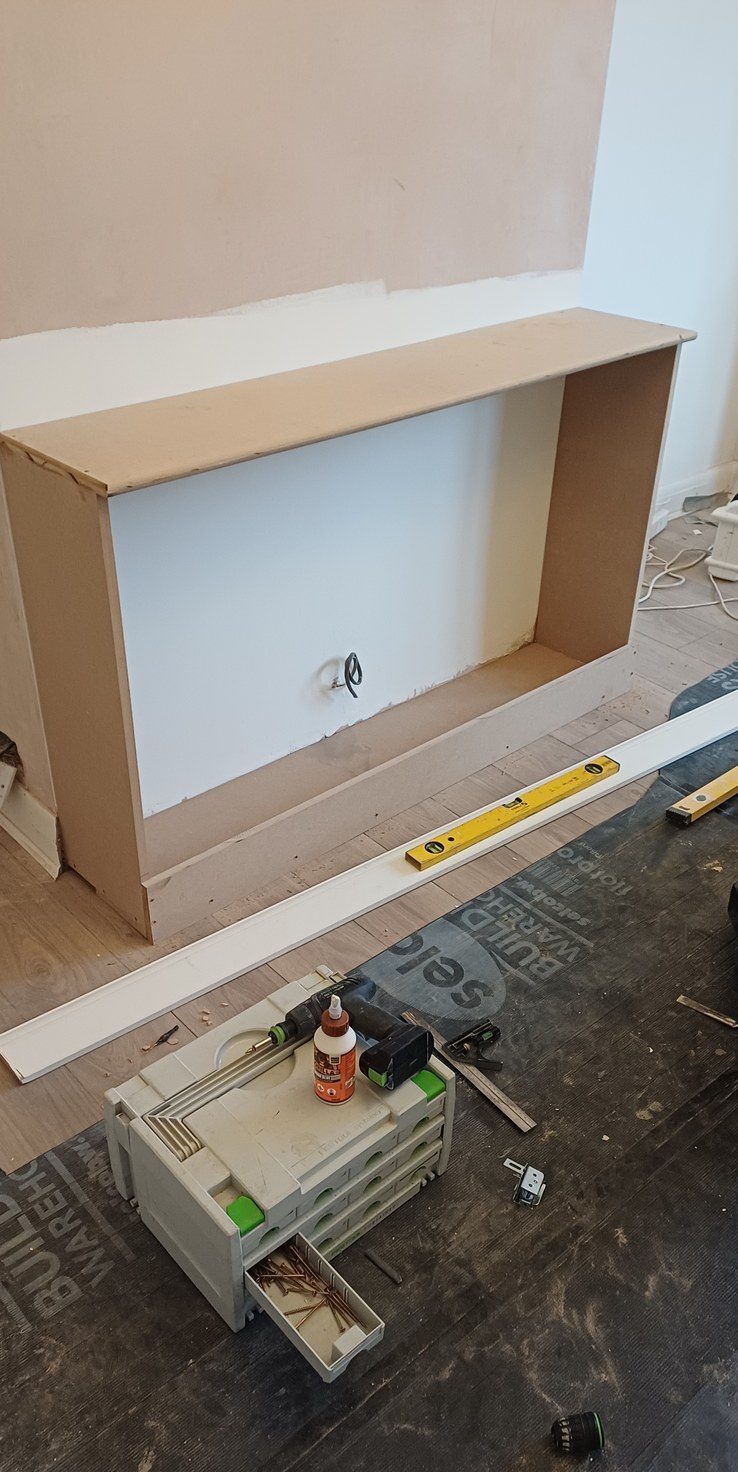
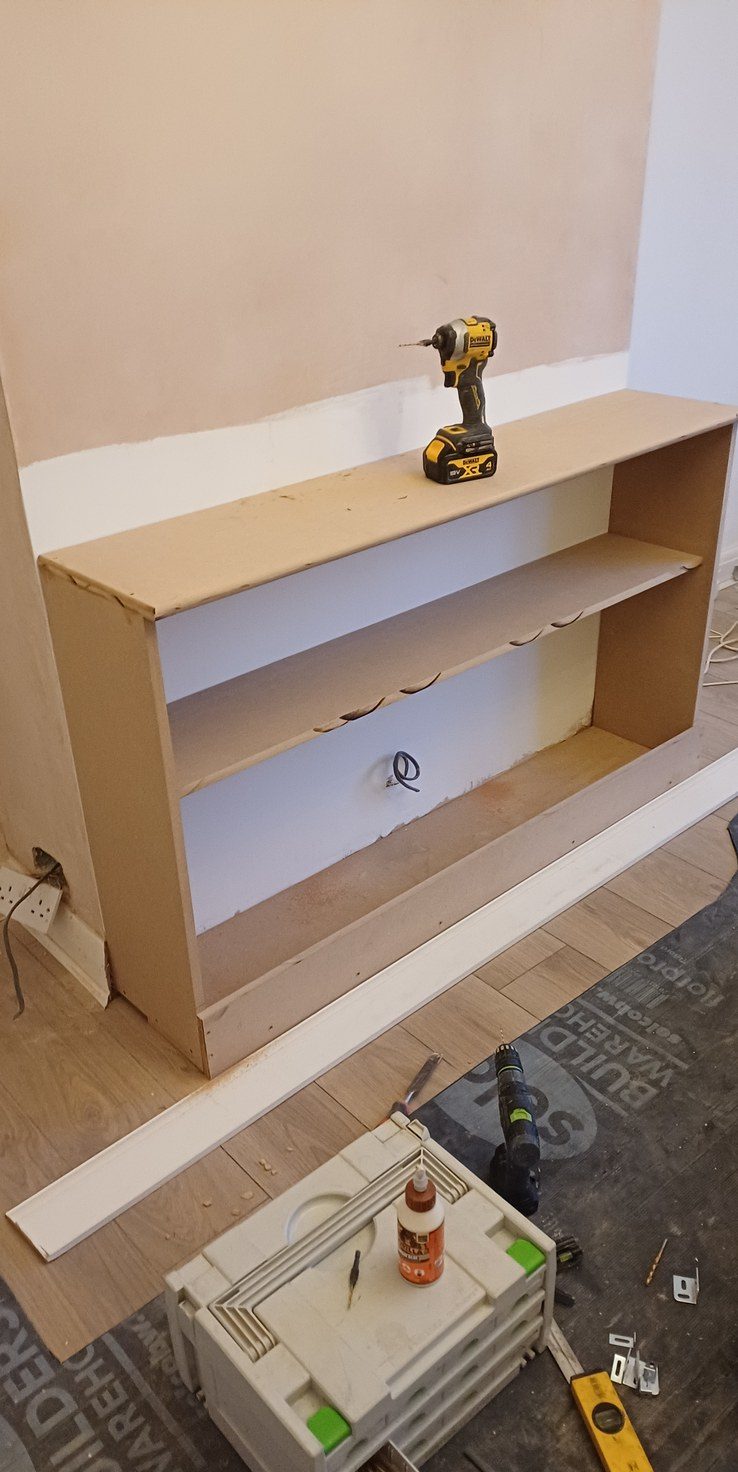
How the job runs
- Measure the opening, not the plan — both alcoves, both diagonals, and the walls for flatness. They will disagree with each other.
- Decide what is straight and what is scribed — the fronts and the shelves stay level, the backs follow the wall.
- Cut and dry-fit — everything offered up in the room before anything is fixed.
- Scribe to the wall — the wall's actual shape cut into the back edge so the two meet without a gap.
- Fix, level and check — a spirit level laid across every shelf, not just the carcass.
- Fill, sand and finish — ready for paint, so it reads as part of the room rather than furniture put against it.
What goes wrong when it is done badly
The usual outcome with a shop-bought unit in an alcove is a wedge-shaped gap down one side, which no amount of caulk hides because the shadow gives it away. The second is a shelf fixed level to the carcass but not to the room, so it reads as sloping against the ceiling line even though a level says it is fine — the eye trusts the ceiling more than it trusts the shelf. The third is pipework boxed in with no access panel. That is invisible on the day and it is a wall coming off the next time an isolating valve is needed, which for a stop tap is a matter of when and not whether.
Questions I get asked
Can you build units into my alcoves?
Yes, and that is most of what this work is. The two alcoves either side of a chimney breast are never the same width, so something made on site is made to the opening that is actually there.
What does scribing mean?
Cutting the shape of your wall into the back edge of the timber, so the two meet with no gap. The front stays straight and level because that is the part people see.
Can you box in my pipes?
Yes — and with an access panel. Boxing a stop tap behind a permanent wall is something I still find regularly, and it means taking the wall off the next time a valve is needed.
Do you make furniture?
No. This is site joinery, made in the room it will live in. I do not have a workshop full of machinery and I would not call myself a cabinetmaker.
If you have an awkward space that nothing off the shelf fits, I will come and measure the opening you actually have. Call Andrew on the number at the top of this page.
Call Andrew on +44 7984 620077