Good plastering is the work nobody notices.
A wall you find yourself looking at is a wall somebody got wrong. Everything else in the room is judged against it.
How the job runs
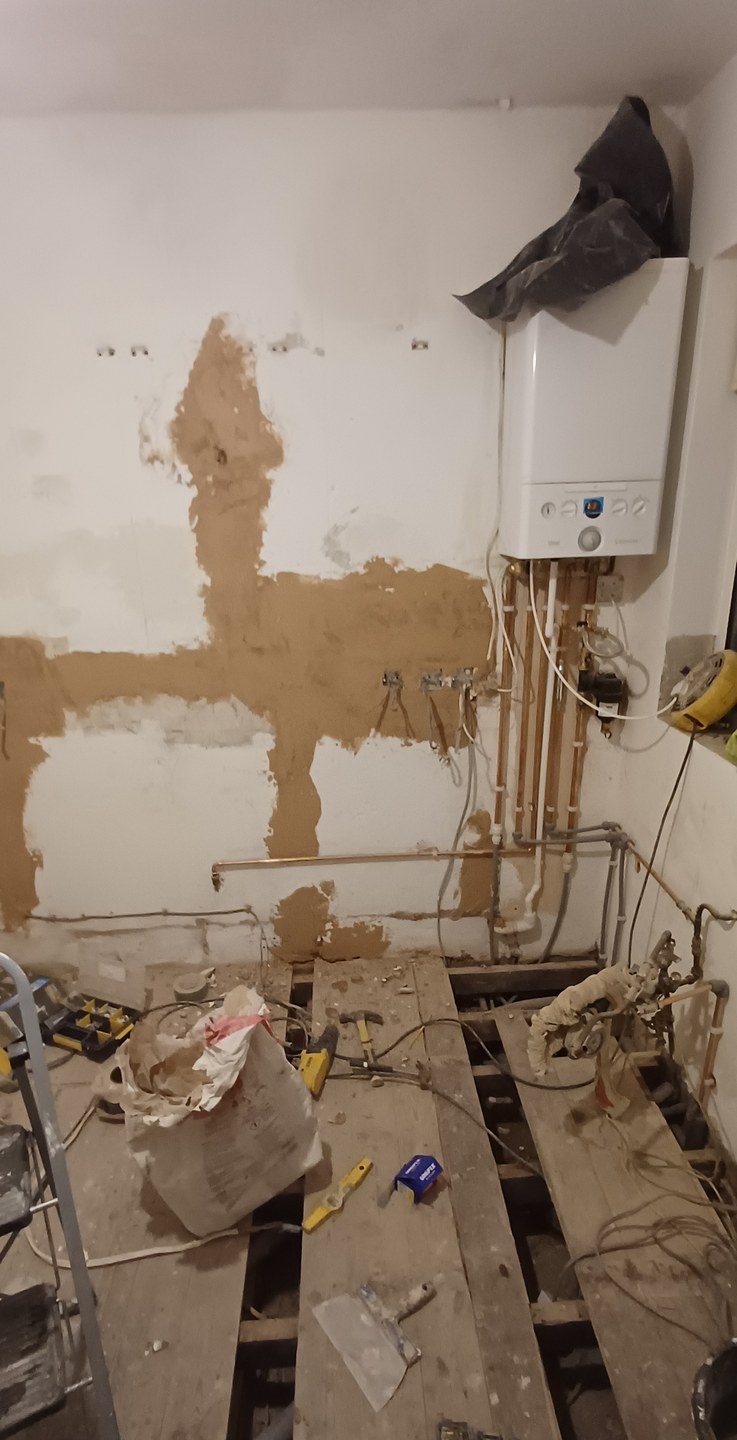
- Look at what is actually there — old lime, modern board, or something already patched three times. It changes everything that follows.
- Take off what has failed — anything hollow, blown or damp comes off. Leaving it is how a new skim cracks within a year.
- Deal with the reason — if the wall was wet, the wall will be wet again unless the cause is fixed first.
- Prepare and bond — the right primer or bonding coat for that substrate, because plaster stuck to the wrong surface will let go.
- Float and skim — flat under a straight edge, sharp internals, clean at the ceiling line.
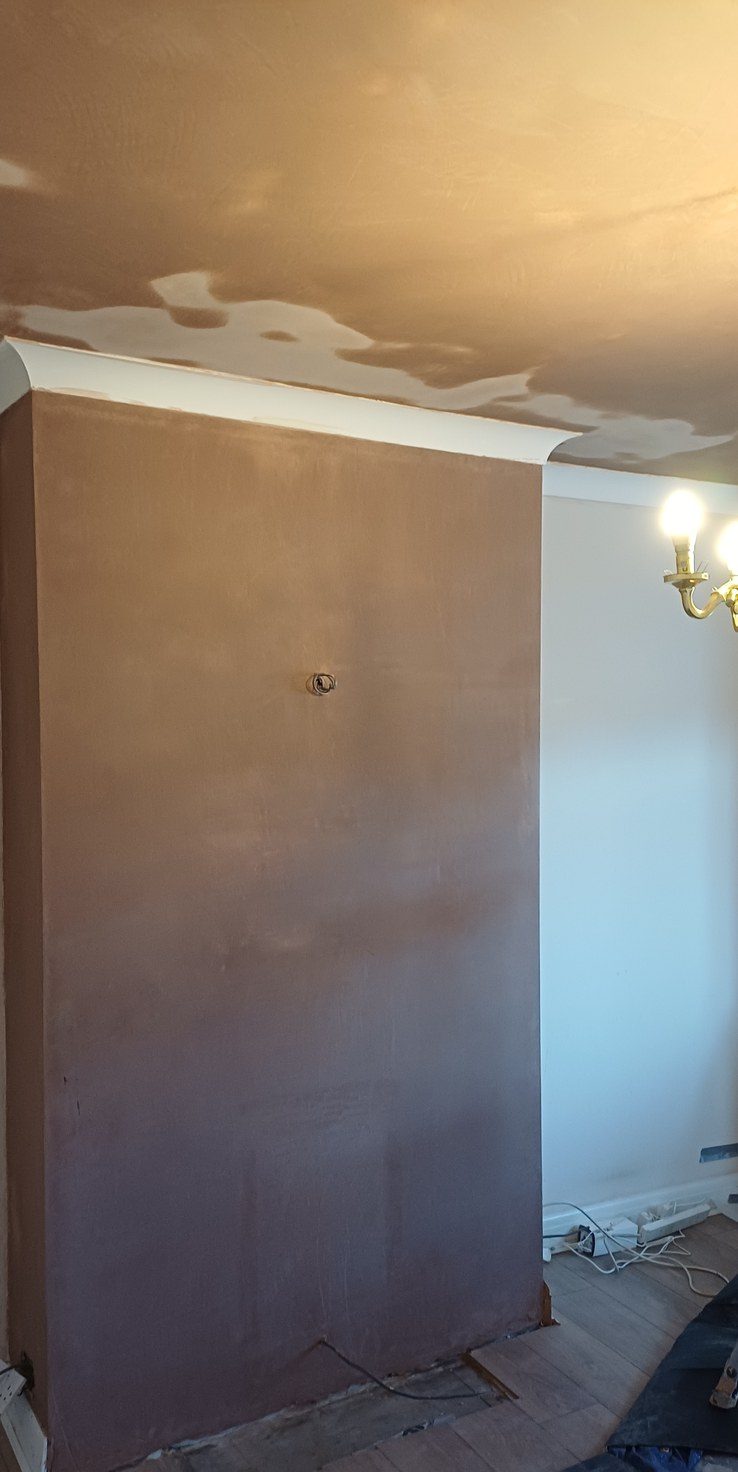
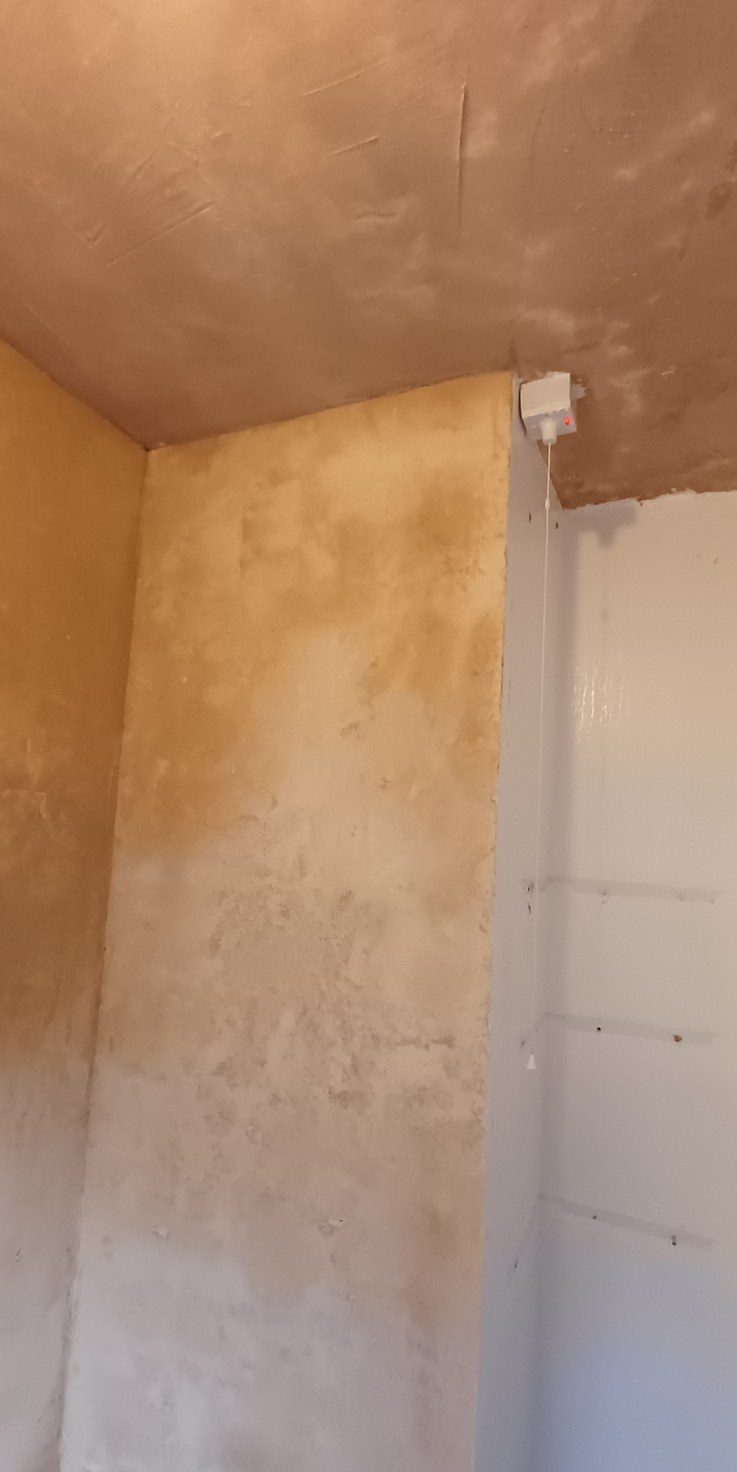
- Let it dry properly — the wall tells you when it is ready by changing colour. I will tell you roughly how long, and it is usually longer than people expect.
What goes wrong when it is done badly
The common failure is plaster put straight over a wall that was never fixed. It looks perfect for a season. Then the damp comes back through, and it comes back through the new work — a stain, then a bubble, then a patch that sounds hollow when you tap it. The homeowner has now paid for plastering twice and still has the original problem. The other failure is speed. Plaster skimmed too thin over an unstable surface will craze into fine cracks across a whole wall, and paint over crazing does not fill it, it emphasises it. Both failures look like good work on the day the invoice is written. That is exactly why they keep happening.
Questions I get asked
How long before I can paint new plaster?
Longer than most people expect. Plaster changes colour as it dries, from dark to pink to pale, and it is not ready until it has finished doing that. Painting it early means painting it twice.
Can you just patch it rather than do the whole wall?
Often, yes. But there is a point where patching is money spent delaying the same conversation, and I will tell you honestly which one you are looking at.
My wall was plastered and it has cracked. Why?
Usually one of two things: it went on over a surface that was never stable or never fixed, or it was skimmed too thin and has crazed. Neither is repaired by painting over it.
Do you plaster ceilings?
Yes, walls and ceilings, from bare brick or bare board, and making good around new pipework and sockets so the patch reads as one surface.
If a wall has failed, or a room is coming apart and needs putting back together properly, I will come and look at what is underneath before saying what it needs. Call Andrew on the number at the top of this page.
Call Andrew on +44 7984 620077