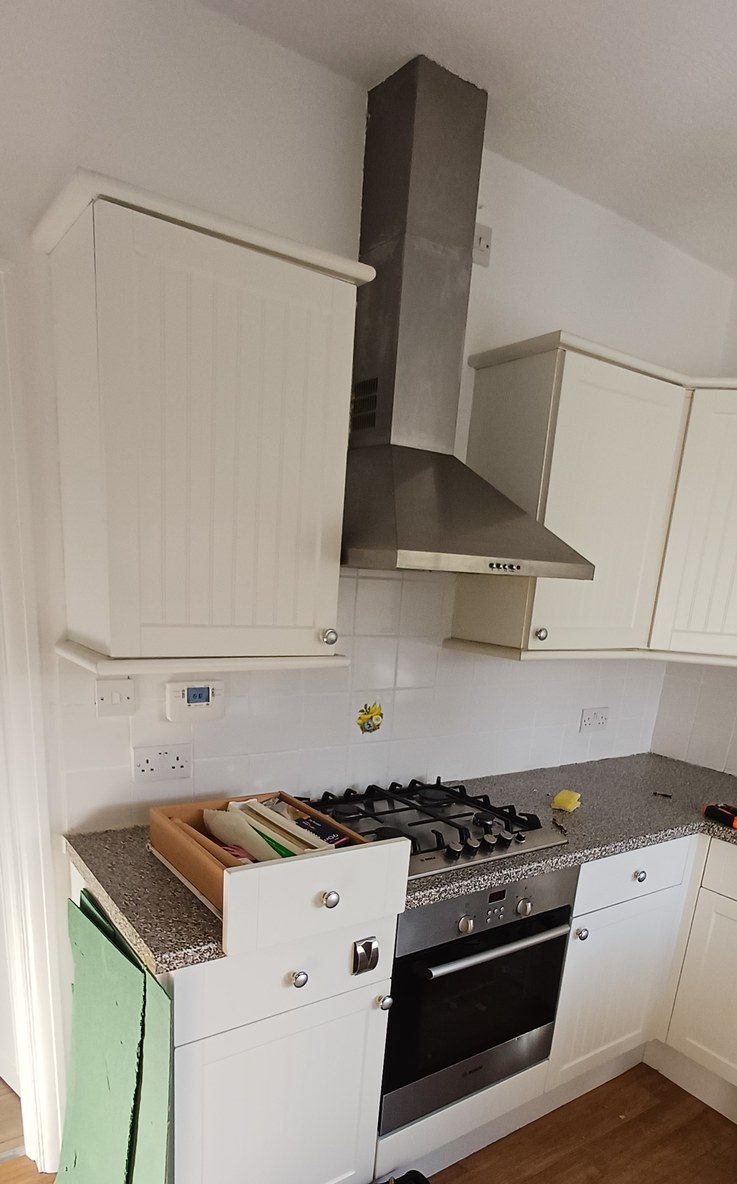
Nobody calls me about mould. They call me about a kitchen.
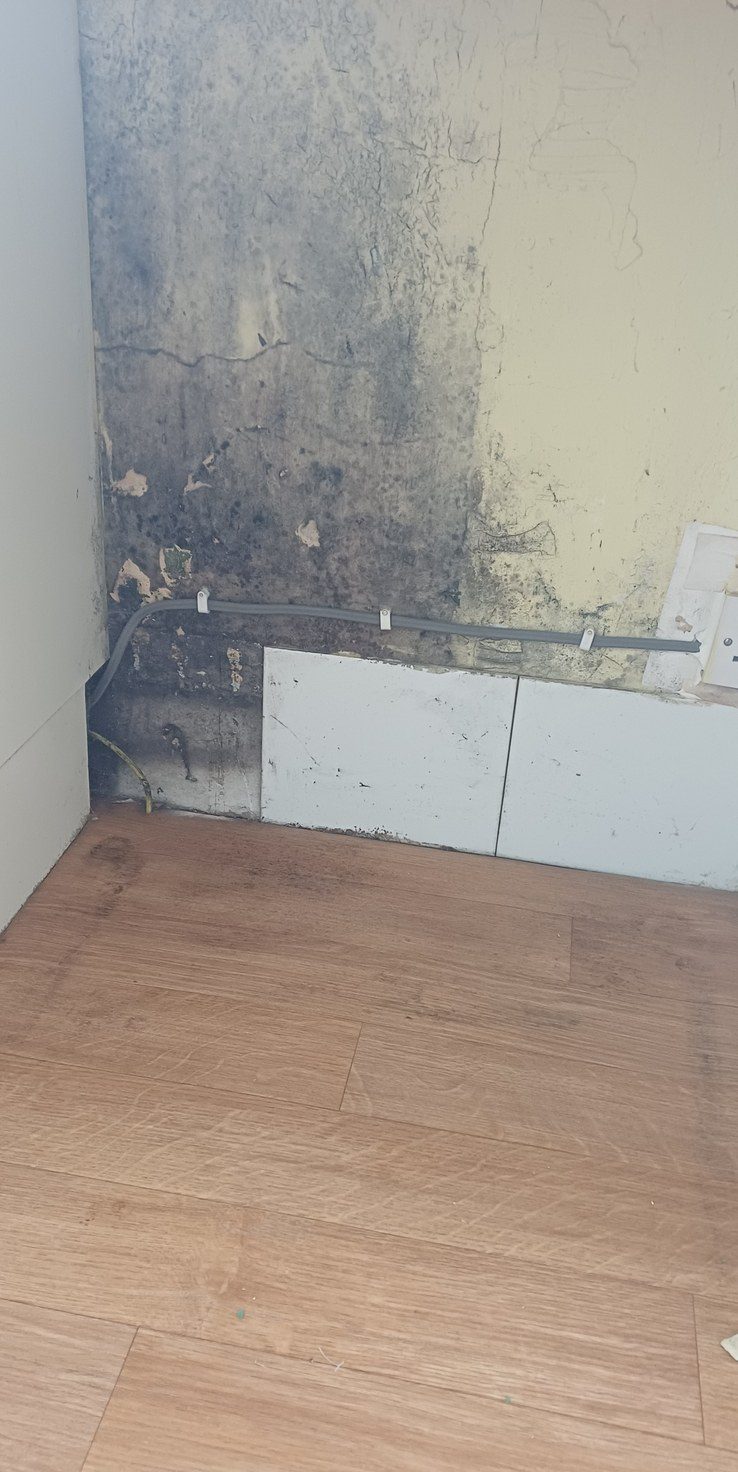
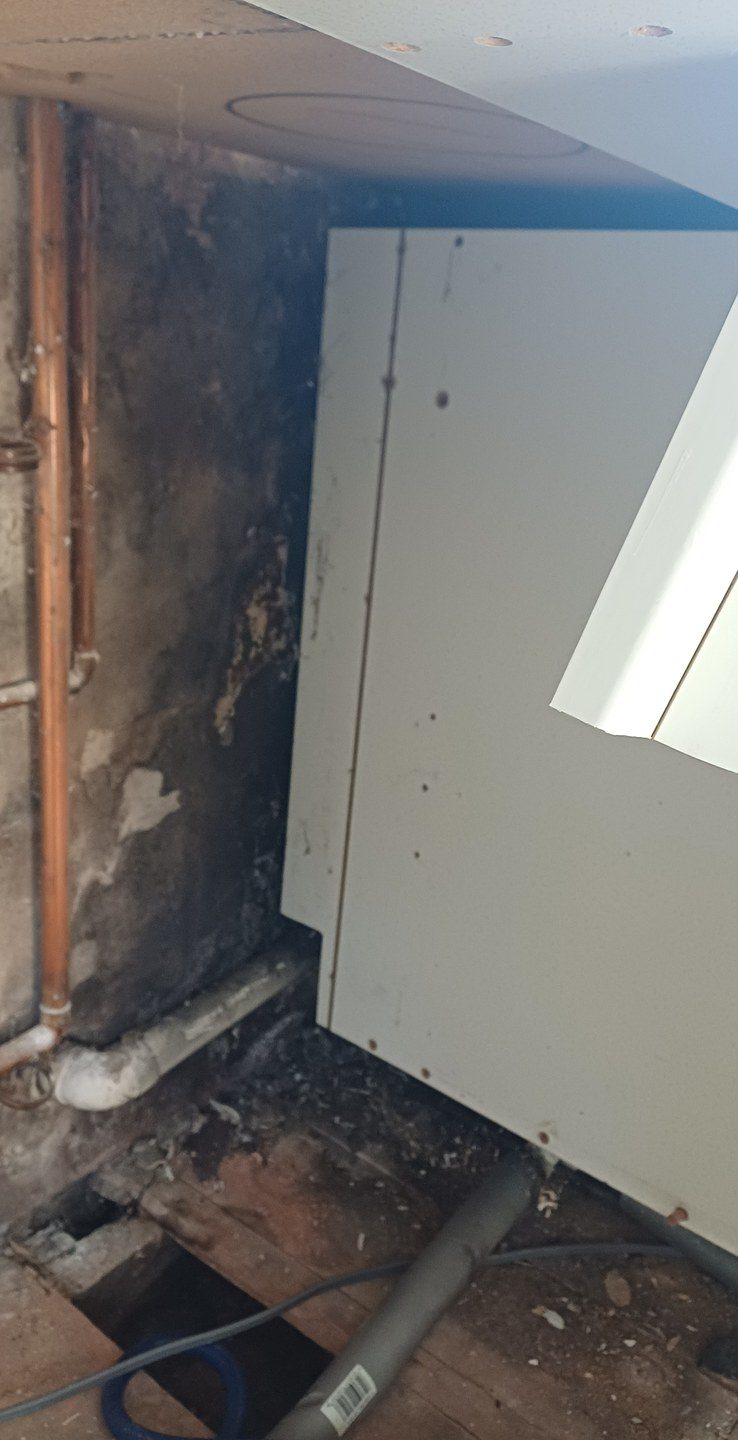
In job after job the damp was the real problem and the tired kitchen was only the thing you could see. It is behind the units, and it has usually been there for years.
How the job runs
- Find the source before anything else — a weeping joint, a failed trap, a leaking main under the floor, or a blocked ventilation route.
- Fix the source — everything after this is decoration if this step is skipped.
- Strip back to sound material — plaster that is blown or contaminated comes off, and that is usually a bigger area than the stain suggests.
- Let it dry — a wall that is sealed up while still wet will fail again from the inside.
- Treat and replaster — the right bonding and finish for a wall that has been wet.
- Make good — so the finished room gives no sign of what was behind it.
What goes wrong when it is done badly
The failure here is not dramatic, it is expensive and slow. Mould gets washed, stain-blocked and painted, and the wall looks right for a season or two. Underneath, the leak that caused it is still running, so the plaster keeps taking on water, the timber behind it stays damp, and what began as a plastering repair becomes a joist and a floor. Meanwhile a family is breathing spores in a room they have been told is fixed. The second failure is scale: stripping back only as far as the visible stain, when contaminated plaster reaches well past it, so the new work is bonded onto old material that is already failing.
Questions I get asked
Is mould dangerous?
It is a health question rather than a building one, and worth taking seriously if anyone in the house has a chest condition. What I can tell you is the building side: mould means something is wet, and it will keep coming back until that is fixed.
I had it treated and it came back. Why?
Because treatment kills what is on the wall and changes nothing about why the wall is wet. A wash down, a stain block and a coat of paint buys about a year. I have opened walls painted over three times and you can read the whole history in the layers.
Is it rising damp?
Usually not, in my experience — far more often it is a leak. If what I find genuinely is rising damp or something structural, I will tell you it needs somebody else, and who.
Do you sell damp surveys?
No. I am not a damp specialist company and I will not sell you a survey. I find leaks because I take kitchens and bathrooms off walls for a living.
If a wall is staining, a room smells damp, or something has come back after being treated, I will come out and find where the water is actually getting in. Call Andrew on the number at the top of this page.
Call Andrew on +44 7984 620077