I do the pipework myself, and the wall that goes back over it.
Most plumbing jobs go wrong at the handover between two trades. On my jobs there isn't one.
How the job runs
- I come and look — no pipework gets designed off a photograph. I need to see where the existing runs go and what the floor is made of.
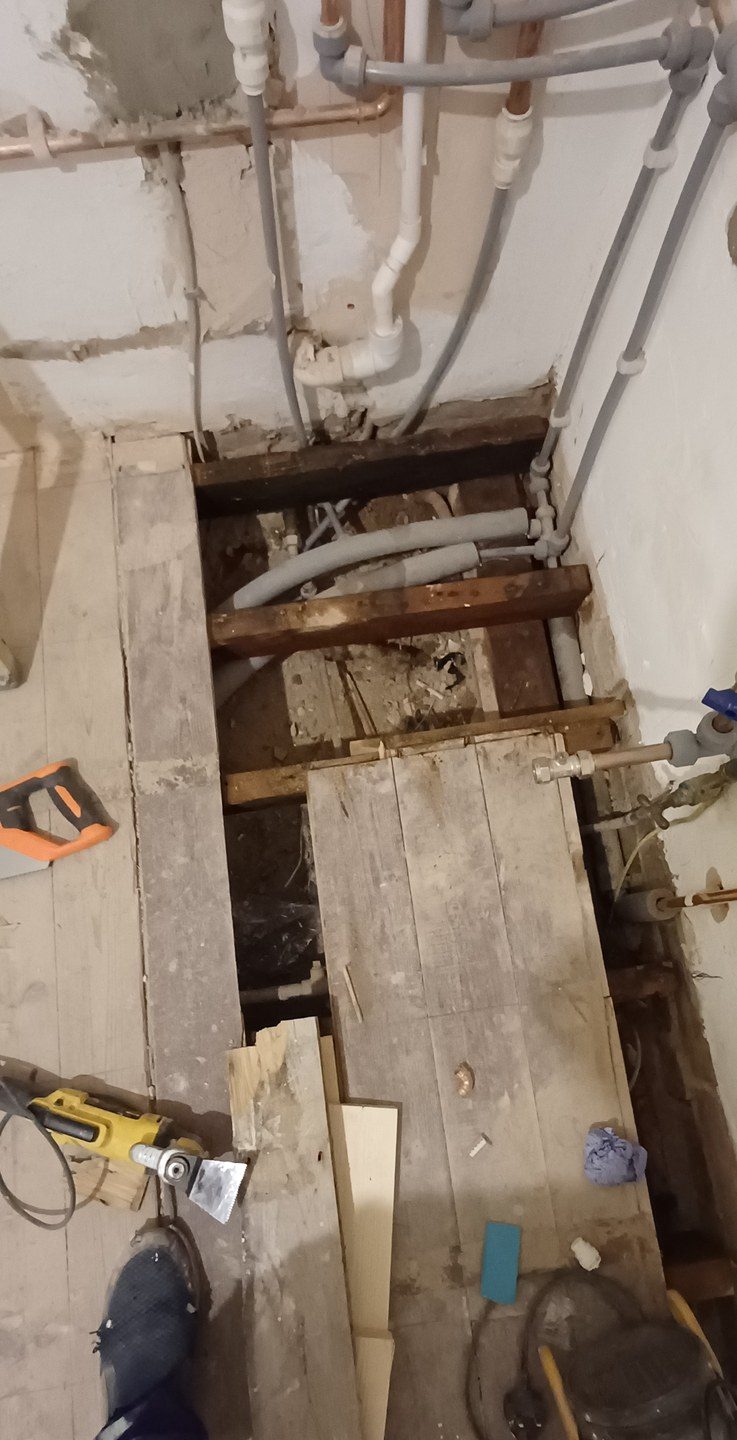
- Strip out and find out — most of what actually needs doing only becomes visible once the old units and the old boxing come off.
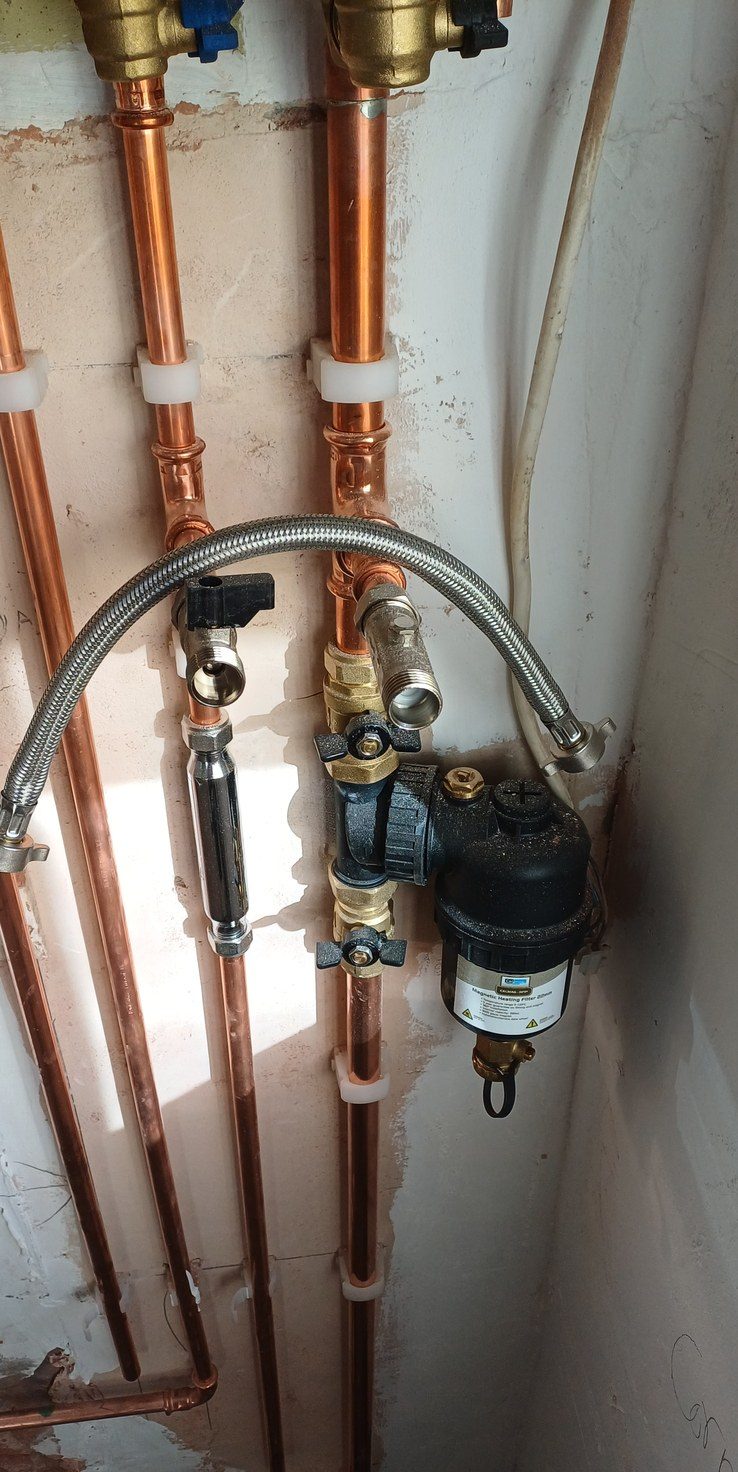
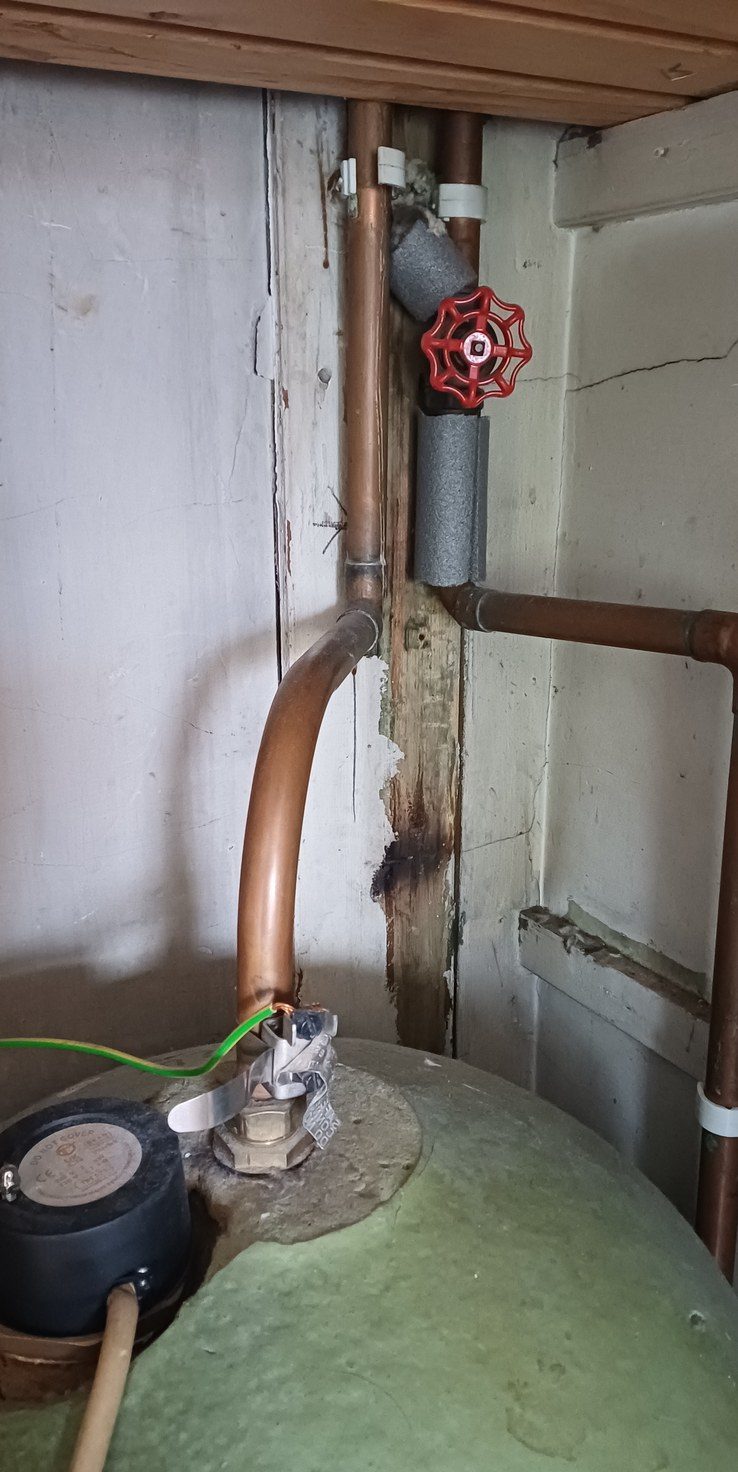
- First fix — copper and waste run in and clipped, isolating valves fitted, everything set out before a single wall closes up.
- Test before I bury it — the system goes under pressure and stays there while I watch it. A joint that is going to weep will weep now, not next winter.
- Make good — plaster, tile and boxing over my own pipework.
- Second fix and hand over — taps, cylinder, traps, then I show you where every isolating valve is and how to turn it off.
What goes wrong when it is done badly
The expensive failures are almost never dramatic. A joint weeps a few drops a day behind a boxed-in wall. Nobody sees it. Eighteen months later a floorboard gives slightly underfoot, or a ceiling below stains, and by then the joists are wet and the repair is not a plumbing job any more — it is a floor, a ceiling and a room. The second one is pipework buried without isolating valves: a dripping tap that should be a ten-minute job means draining the whole system, and every future repair costs more than it should for as long as you own the house. The third is a pipe clipped badly, which is not a leak at all but will tick and knock every time the heating fires, and cannot be fixed without opening the floor you just paid to lay.
Questions I get asked
Do you do gas work?
No. Gas is a Gas Safe registered engineer's work — the boiler connection, the meter, anything carrying gas. I bring one in, have the wet side ready for him, and he signs for his own work. Anyone who tells you otherwise, ask to see the registration.
Can you find a leak if I do not know where it is?
Usually. Most of the leaks I find are behind kitchen units or under a floor, and they have been running for a long time before anyone notices. It normally shows up as a stain, a soft floorboard or a smell rather than as water.
Will you have to lift my floor?
Sometimes, and I will tell you before I start rather than halfway through. If pipework runs under the boards there is no way to reach it from above. The boards go back afterwards.
Why do you fit isolating valves everywhere?
So the next repair is small. Without them, changing a dripping tap means draining the whole system. With them it is a ten-minute job, and it stays a ten-minute job for as long as you own the house.
If something is leaking, or a room needs stripping back and doing properly, I will come out and look at it before I say anything about price. Call Andrew on the number at the top of this page.
Call Andrew on +44 7984 620077