The part you will remember is the week you had no kitchen.
A kitchen is six trades in one room in an order that cannot be changed. Get the order wrong and the week becomes three.
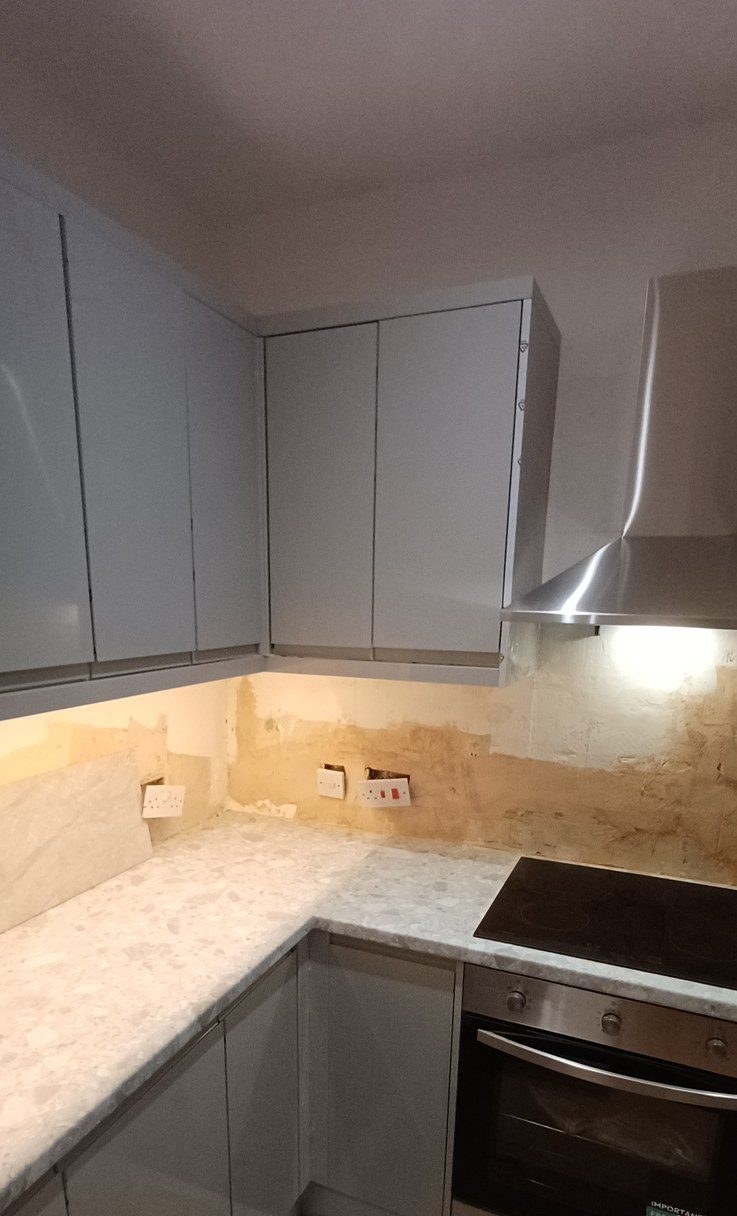
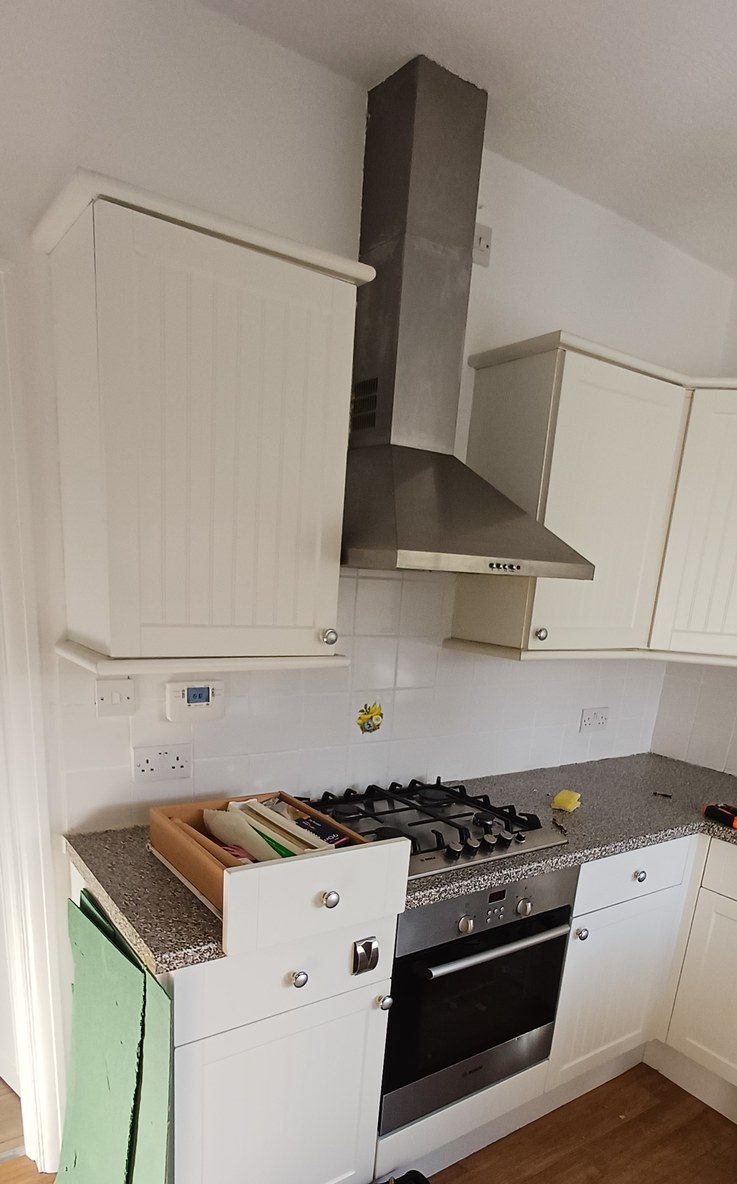
How the job runs
- Come and look, and open something if you will let me — the wall behind the units is the single biggest unknown in the price.
- Strip out — the old kitchen comes off, and this is the day we find out what we are really dealing with.
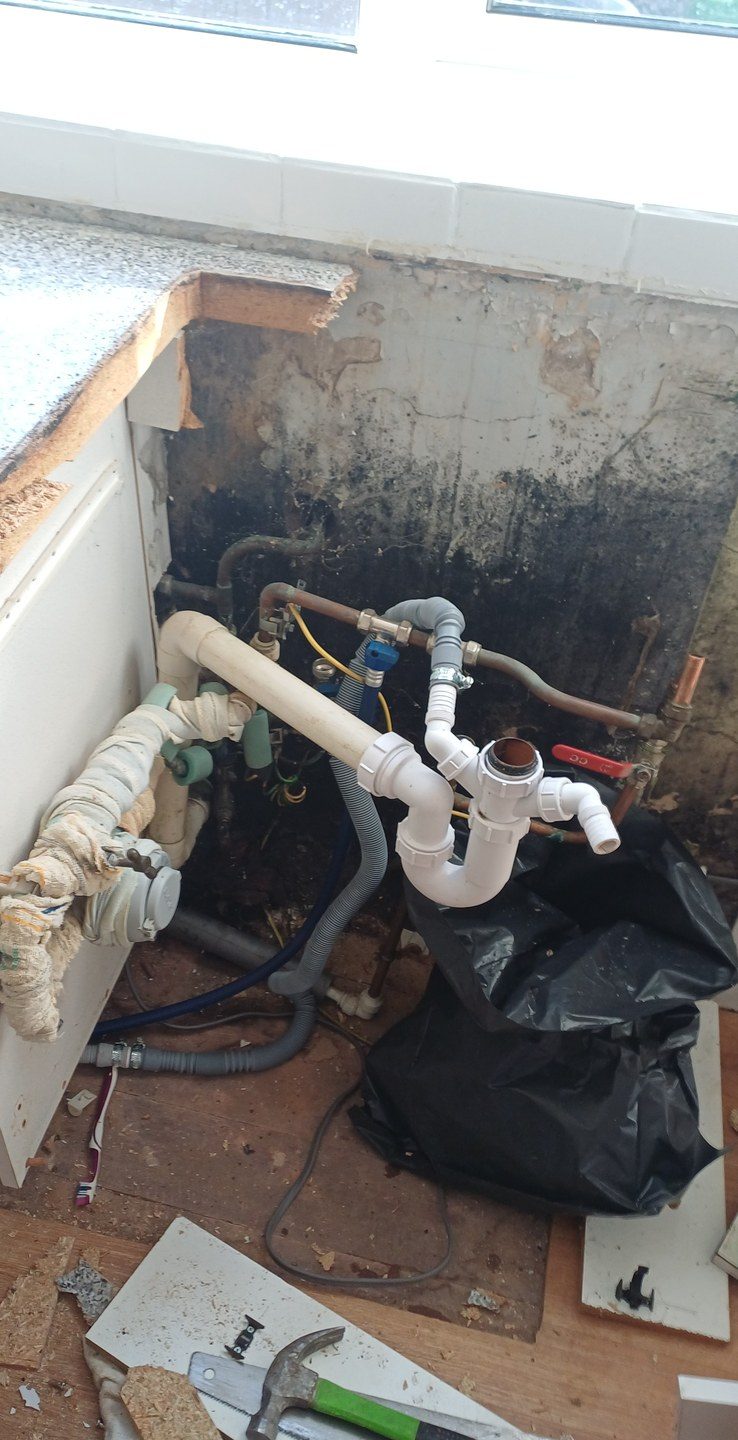
- Put right what is behind it — leaks fixed, wall taken back and replastered if it needs it.
- First fix — pipework and cable routes set out and in before anything closes up.
- Floor, then plaster, then tile — in that order, because each one needs the last one finished.
- Fit the units, scribe the worktops — the part everybody thinks is the whole job.
- Gas and electrical connection — a Gas Safe engineer and an electrician, each signing for their own work.
What goes wrong when it is done badly
The expensive mistake is fitting a new kitchen over an old problem. New units go onto a wall that has been wet for years, the doors are lovely, and in eighteen months there is a smell nobody can place and a swollen carcass at the bottom of the run. Taking that out means taking out the kitchen you just paid for. The second is a job run by whoever is available rather than in the order the trades demand — tiling before plastering, units before the floor — which produces a room that is finished but wrong at every junction, and cannot be corrected without undoing it. The third is simply a date given before anyone has looked behind the units.
Questions I get asked
Can you fit a kitchen I have bought myself?
Yes. Most of the kitchens I fit are bought by the customer. What matters is that somebody measures the room properly before the order goes in, because a run forty millimetres too long is a real problem once it is delivered.
What is usually behind the old units?
More often than anyone would like, damp. A waste weeping behind the sink, or a mains pipe seeping under the floor, held against the wall by the very cupboards hiding it. If that is what is there it has to be fixed before the new kitchen goes on.
Do you do the plumbing and tiling as well?
Nearly all of it — strip out, pipework, plastering, floor, tiling and the units. Gas is connected by a Gas Safe registered engineer and an electrician connects and certifies.
Why can you not give me a firm date before you look?
Because the strip-out day is when we find out what we are dealing with. I would rather give you a range and the reasons it might move than a date I already suspect is wrong.
If you are planning a kitchen, get me out before you fix a date, so we both know what is behind the units. Call Andrew on the number at the top of this page.
Call Andrew on +44 7984 620077